10 Best Telescopes Of 2026
Telescopes — Reviews, Recommendations & Updated Buying Guide October 2026


DWARFLAB DWARF Mini Smart Telescope
Why We Love It


K&F CONCEPT 8-32X50 Zoom Monocular with Cell Phone Holder
Why We Love It
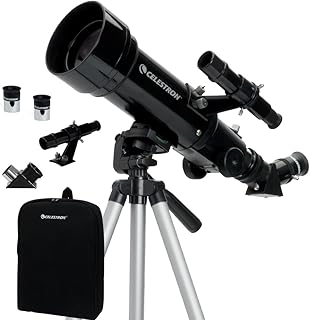
Celestron Travel Scope 70 Portable Refractor Telescope
Why We Love It

DWARFLAB Dwarf 3 Smart Telescope - Portable
Why We Love It

Celestron 31045 AstroMaster 130EQ Newtonian Reflector
Why We Love It

Celestron 22035 Travel Scope DX 70mm Portable Refractor
Why We Love It

Celestron 22030 Travel Scope Portable Refractor Telescope
Why We Love It

Celestron 22480 StarSense Explorer 114mm Tabletop Dobsonian
Why We Love It

HETEKAN Telescope for Adults
Why We Love It

HETEKAN Telescope for Adults & Beginners
Why We Love It
Quick Pick
10 Best Telescopes Of 2026
Quick Pick
DWARFLAB DWARF Mini Smart Telescope - 840g Ultra-Portable Astronomy Telescope for Astrophotography with Built-in Filters, Auto GOTO, AZ/EQ Mode and Cloud Processing
K&F CONCEPT 8-32X50 Zoom Monocular with Cell Phone Holder, Monocular for Adults -BAK4 Prism and FMC Lens - IP66 Waterproof - Great for Birdwatching, Hiking, Hunting, Camping, Traveling, Black
Celestron Travel Scope 70 Portable Refractor Telescope – 70mm Aperture, Fully-Coated Glass Optics – Includes Tripod, Backpack & Software – Ideal for Beginners & Travel
DWARFLAB Dwarf 3 Smart Telescope - Portable, Astronomy/Wildlife/Panorama Capture, Equalizer Mode, Cloud Processing, 4K Car Tracking, Ultra Light 3 Pounds, Suitable for All Ages
Celestron 31045 AstroMaster 130EQ Newtonian Reflector Telescope, Dark Blue
Celestron 22035 Travel Scope DX 70mm Portable Refractor Telescope with Fully-Coated Glass Optics, Backpack, Astronomy Software Package, and Digiscoping Smartphone Adapter | Ideal Telescope Kit for Beginners & Travel, Day-to-Night Use, Quick Setup, Fully-Coated Glass Optics, Backpack Included
Celestron 22030 Travel Scope Portable Refractor Telescope with 80mm lens, Fully-Coated Glass Optics, Bonus Astronomy Software Package and Digiscoping Smartphone Adapter
Celestron 22480 StarSense Explorer 114mm Tabletop Dobsonian Smartphone App-Enabled Telescope Works with StarSense App to Help You Find Nebulae, Planets & More – iOS/Android Compatible
HETEKAN Telescope for Adults, 80mm Aperture 500mm Refractor (20X-150X) Portable Travel Telescopes for Beginners with with Tripod & Adapter, Stickers, Backpack
HETEKAN Telescope for Adults & Beginners, 80mm Aperture 600mm Refractor (24X-180X) Portable Travel Telescopes with Phone Adapter, Carry Bag
Buying Guide: Telescopes
📋 Table of Contents
1What's the difference between refractor and reflector telescopes?
Refractors use lenses and are better for viewing the moon and planets with sharp, clear images, while reflectors use mirrors and give you more light-gathering power for deep-sky objects like galaxies. Reflectors are generally cheaper for the same aperture size, but refractors need less maintenance since mirrors in reflectors can lose their coating over time.
2What aperture size should I choose for a beginner?
A 70-90mm refractor or 4.5-6 inch reflector is ideal for starting out—big enough to see Saturn's rings and Jupiter's moons clearly, but still portable and easy to set up. Anything smaller limits what you can see, while larger telescopes become heavy and require a sturdy mount that costs more.
3How important is the mount compared to the telescope tube?
The mount is just as critical as the telescope itself because a shaky or poor-quality mount makes everything blurry and frustrating to use. A stable equatorial or alt-azimuth mount will dramatically improve your viewing experience, so don't skimp on this part.
4When is it worth spending more on a telescope?
Invest more if you plan to observe regularly, want to photograph through the telescope, or are interested in viewing faint deep-sky objects that require better optical quality. Budget options work fine for casual viewing of the moon and bright planets, but quality glass and coatings make a real difference for serious hobby use.
5What specs should I actually pay attention to?
Focus on aperture (the diameter of the main lens or mirror—bigger is better for light collection) and focal length (affects magnification), then check that eyepieces are included and of decent quality. Avoid being swayed by advertised magnification numbers alone, as a telescope's usefulness depends more on aperture than how much you can magnify.
How we choose
Our editors are people who genuinely love testing and writing about products. We compare each product's real-world usability and strengths, then distill what matters most into our own "Why We Love It" points — so you get an honest, at-a-glance sense of what counts before you buy.