10 Best Powered Usb Hubs Of 2026
Powered Usb Hubs — Reviews, Recommendations & Updated Buying Guide September 2026


UGREEN Powered USB Hub 3.0
Why We Love It


TP-Link UH720, Powered USB 3.0 Hub
Why We Love It
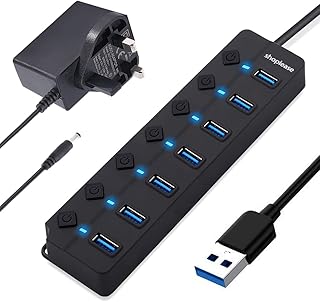
USB 3.0 Splitter
Why We Love It

ACASIS 16 Ports Powered USB 3.2 Hub (8 USB-A 3.2 +8 USB-C
Why We Love It

UGREEN USB Hub 3.0
Why We Love It

Anker USB Hub, 4-in-1 USB Splitter
Why We Love It

Belkin 4-Port USB Hub
Why We Love It

ACASIS USB 3.1 Hub Powered
Why We Love It

Atolla Powered USB Hub
Why We Love It

TP-Link UH700, 7-Port USB 3.0 Ultra Slim Hub
Why We Love It
Quick Pick
10 Best Powered Usb Hubs Of 2026
Quick Pick
UGREEN Powered USB Hub 3.0, 7-Ports Charging Extender Data Hub (12V/2A) | Splitter Extension, Power USB A Adapter (12V/2A Not Fast Charge) with Individual On/Off Switches for Laptop, PC
TP-Link UH720, Powered USB 3.0 Hub, 7 Data + 2 Charging Ports | 12V/4A Power Adapter, Power On/Off Button, Compatible with Windows, Mac, Chrome & Linux OS
USB 3.0 Splitter, 7-Port USB 3.0 Hub with Individual Power Switches and Lights, Portable Expansion Data Hub with 5V/2A Power Adapter for Windows 10, 8.1, 8, 7, Vista, XP, Linux, Mac OS X
ACASIS 16 Ports Powered USB 3.2 Hub (8 USB-A 3.2 +8 USB-C 3.2), 10Gbps | Individual On/Off Switch for Each Port • Aluminum Housing • Better Heat Dissipation • Plug & Play • 96W Power Adapter
UGREEN USB Hub 3.0, USB Splitter 4 Port Ultra Slim with 5Gbps Data Transfer | USB Extender for Mouse, Keyboard, Flash Drive, Card Reader, Printer, Compatible with Laptop, Desktop PC, Xbox, PS5, etc.
Anker USB Hub, 4-in-1 USB Splitter, USB Extender, Computer Accessories | Multiport adapter with 5Gbps Data Transfer for USB-A Port Laptop, PC, Desktop and More (Charging Not Supported)(USB-A, 0.6m)
Belkin 4-Port USB Hub - Powered Desktop Docking Station Adapter supports A, 2.0 and 1.1 Charging Splitter for Drives, Keyboards Mice
ACASIS USB 3.1 Hub Powered, 7 Port USB 3.1 Hub with 10Gbps Data Speed, Aluminum Case, USB Hub Powered with 24W Power Adapter, Usb Hub for Pc/Laptop, Computer, Un
atolla Powered USB Hub, CLHTS 4-Port USB 3.0 Hub with 4 USB 3.0 Data Ports and 1 USB Smart Charging Port, USB Splitter with Individual On/Off Switches and 5V/3A Power Adapter
TP-Link UH700, 7-Port USB 3.0 Ultra Slim Hub, 3 Charging Ports | 3 BC 1.2 Charging Ports up to 5V/1.5A, Power On/Off Button, Compatible with Windows, Mac, Chrome & Linux OS
Buying Guide: Powered Usb Hubs
📋 Table of Contents
1How many USB ports should a powered USB hub have?
Look for hubs with 4 to 7 ports for most users, as this balances versatility with compact design. More ports can be useful for gaming or video editing, but ensure the hub has enough power delivery to support all connected devices without overloading.
2What power delivery specs should I prioritize?
Opt for hubs with at least 100W of total power delivery, especially if connecting high-drain devices like external hard drives or monitors. USB 3.0 or USB-C PD support ensures faster data transfer and better charging efficiency for modern devices.
3Should I choose a hub with built-in USB-C or USB-A ports?
USB-C hubs are more versatile for modern laptops and phones, while USB-A hubs are better for older peripherals. A hybrid model with both types offers the best of both worlds, ensuring compatibility with a wide range of devices.
4What’s the difference between a powered and unpowered hub?
Powered hubs have their own power source, allowing them to supply enough electricity for devices like external drives or USB-C chargers. Unpowered hubs rely on the host port and may not support power-hungry devices, leading to slower performance or device malfunctions.
5Are there any common mistakes to avoid when buying a powered USB hub?
Avoid hubs with low-quality or unshielded cables, as they can cause data corruption or electrical interference. Also, ensure the hub is compatible with your device’s operating system and check for firmware updates to maintain stability and security.
How we choose
Our editors are people who genuinely love testing and writing about products. We compare each product's real-world usability and strengths, then distill what matters most into our own "Why We Love It" points — so you get an honest, at-a-glance sense of what counts before you buy.