10 Best Mini Beginners Multi Color 3d Printer Of 2026
Mini Beginners Multi Color 3d Printer — Reviews, Recommendations & Updated Buying Guide November 2026


Fully Assembled Mini 3D Printer for Kids and Beginners
Why We Love It


Mini 3D Printer for Beginners
Why We Love It

Mini 3D Printer, 3D Printers for Beginners
Why We Love It

Sorandy Fdm Mini 3D Printer For Beginners
Why We Love It

Mini 3D Printer, FDM 3D Printers for Beginners
Why We Love It
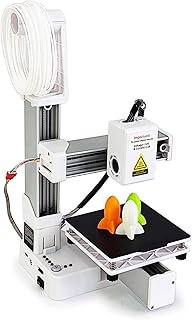
Mini 3D Printer, 3D Printers for Beginners
Why We Love It

Mini 3D Printer, High Accuracy DIY Printers
Why We Love It

ASHATA FDM Mini 3D Printer
Why We Love It

Small 3D Printer for Beginner
Why We Love It

3D Printer, FDM Mini 3D Printer for Beginners
Why We Love It
Quick Pick
10 Best Mini Beginners Multi Color 3d Printer Of 2026
Quick Pick
Fully Assembled Mini 3D Printer for Kids and Beginners - Complete Starter Kit with Auto Leveling 3D Printing Machine, 10M PLA Filament, and SD Card - WiFi 3D Home Printer for MAC Windows Linux (Green)
Mini 3D Printer for Beginners, High Accuracy Frequency Division Multiplexing 3D Printer, 4x4x4 Printing Size, Fast Heating Small 3D Printing Machine for Home Workshops,
Mini 3D Printer, 3D Printers for Beginners, High Speed & Precision Frequency Division Multiplexing 3D Printer, Printing Size Approx. 100 X 100 X 100mm / 4 X 4 X 4in (Black)
Sorandy Fdm Mini 3D Printer For Beginners, High Printing Accuracy Uniform Heating Machine Diy Kit Beginners & Children, Size 4X4X4In (Uk Plug)
Mini 3D Printer, FDM 3D Printers for Beginners, 4x4x4 Printing Size, Support 1.75mm TPU PLA, Small 3D Printing Machine with (UK Plug)
Mini 3D Printer, 3D Printers for Beginners, High Speed & Precision Frequency Division Multiplexing 3D Printer, Printing Size Approx. 100 X 100 X 100mm / 4 X 4 X 4in (White)
Mini 3D Printer, High Accuracy DIY Printers, 4 X 4 X 4in Frequency Division Multiplexing 3D Printer, for Education (GB Plug)
ASHATA FDM Mini 3D Printer, Fully Assembled 3D Printers for Kids and Beginners, 40mm/s 100x100x100mm 3D Printing Machine Small 3D Printer Supports 1.75mm PLA TPU Filament (Black)
Small 3D Printer for Beginner, Frequency Division Multiplexing 3D Printer, High Accuracy Rapid Heating And Printing Compact 3D Printing Machine for Education (UK Plug)
3D Printer, FDM Mini 3D Printer for Beginners, High Printing Accuracy Printing, Uniform Heating Printing Volume, 4x4x4in Mini 3D Printer (UK Plug)
Buying Guide: Mini Beginners Multi Color 3d Printer
📋 Table of Contents
1What print size is realistic for a mini 3D printer for beginners?
Most mini 3D printers offer a build volume of around 120x120x120mm, which is great for small models, keychains, and basic prototypes. Larger prints require bigger machines, so focus on what fits your hobby or classroom needs.
2How important is multi-color printing for a beginner?
Multi-color printing is more about fun and creativity than necessity. Many mini 3D printers use a single extruder and require manual filament swaps, while others support dual extruders for automatic two-color prints. Decide if you want to invest in a more complex setup for color variety.
3What type of filament is best for a beginner-friendly 3D printer?
PLA is the top choice for beginners due to its low warping, easy printing, and wide color range. Avoid ABS unless your printer has a heated bed, as it can be tricky to work with and emits stronger fumes when printed.
4Should I prioritize a printer with a heated bed or not?
A heated bed helps with first-layer adhesion and reduces warping, especially with materials like ABS or PETG. For PLA-only use, it's less critical, but a heated bed adds flexibility for future upgrades and better print quality.
5What software is typically included or needed for a mini 3D printer?
Most mini 3D printers come with basic slicing software like Cura or PrusaSlicer, which are free and user-friendly. Some include all-in-one apps for beginners, but you may need to download and learn slicing software to customize print settings.
How we choose
Our editors are people who genuinely love testing and writing about products. We compare each product's real-world usability and strengths, then distill what matters most into our own "Why We Love It" points — so you get an honest, at-a-glance sense of what counts before you buy.