10 Best Astrophotography Telescopes Of 2026
Astrophotography Telescopes — Reviews, Recommendations & Updated Buying Guide September 2026


DWARFLAB DWARF Mini Smart Telescope
Why We Love It


Celestron 22452 StarSense Explore LT114AZ Newtonian
Why We Love It
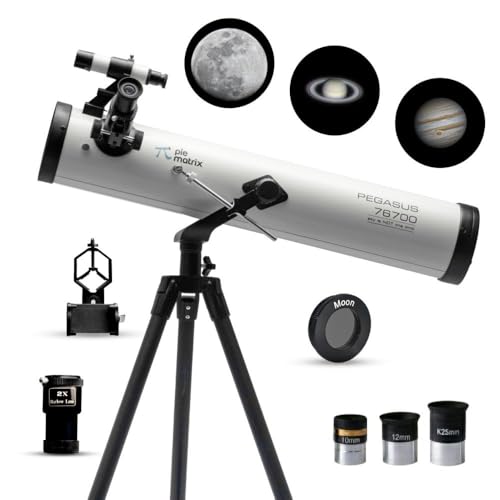
Pie Matrix Pegasus 76700 Newtonian Reflector Telescope with
Why We Love It

Celestron 31051 AstroMaster 130EQ Motor Drive Newtonian
Why We Love It

Celestron 22461 StarSense Explore DX 130 Newtonian Reflector
Why We Love It

DWARFLAB Dwarf 3 Smart Telescope - Portable
Why We Love It

Celestron 31045 AstroMaster 130EQ Newtonian Reflector
Why We Love It

Telescope, Telescope for Adults High Powered
Why We Love It

Jectse 4K HD Electronic Eyepiece Camera with 3 Inch Color
Why We Love It
Quick Pick
10 Best Astrophotography Telescopes Of 2026
Quick Pick
DWARFLAB DWARF Mini Smart Telescope - 840g Ultra-Portable Astronomy Telescope for Astrophotography with Built-in Filters, Auto GOTO, AZ/EQ Mode and Cloud Processing
Celestron 22452 StarSense Explore LT114AZ Newtonian Reflector Telescope, Smartphone App-enabled, includes Two Eyepieces, 2xBarlow lens, Phone Dock/Height-adjustable Tripod, iOS/Android Compatible
Pie Matrix Pegasus 76700 Newtonian Reflector Telescope with 235x Ultra HD Zoom,Fully Coated Glass Optics,Alt-Az Mount, Professional Telescopes to Explore Moon, Saturn Rings, Planets & Deep Sky Objects
Celestron 31051 AstroMaster 130EQ Motor Drive Newtonian Reflector Telescope, Dark Blue
Celestron 22461 StarSense Explore DX 130 Newtonian Reflector Telescope with Smartphone App-enabled Technology, includes Two Eyepieces, Phone Dock and Height-adjustable Tripod, iOS/Android Compatible
DWARFLAB Dwarf 3 Smart Telescope - Portable, Astronomy/Wildlife/Panorama Capture, Equalizer Mode, Cloud Processing, 4K Car Tracking, Ultra Light 3 Pounds, Suitable for All Ages
Celestron 31045 AstroMaster 130EQ Newtonian Reflector Telescope, Dark Blue
Telescope, Telescope for Adults High Powered, Professional Refractor Auto-Focus Smart Digital Electronic Telescopes with 4K Astrophotography Camera, Dual Screens Spotter, Carry Bag and 32G Card
Jectse 4K HD Electronic Eyepiece Camera with 3 Inch Color Display, 5X Digital Zoom, 128GB Storage. Telescope Eyepiece with Screen for Astronomy, Bird Watching, Astrophotography
Buying Guide: Astrophotography Telescopes
📋 Table of Contents
1What aperture size is ideal for astrophotography telescopes?
Look for an aperture of at least 150mm for light-gathering power, with larger apertures (200mm+) offering better detail in deep-sky objects. A larger aperture allows more light to enter, which is crucial for capturing faint celestial objects like galaxies and nebulae.
2Should I choose a refractor or reflector telescope for astrophotography?
Refractors offer sharp, high-contrast images and are great for planetary photography, while reflectors (especially Schmidt-Cassegrain or Newtonian designs) provide larger apertures at lower cost, ideal for deep-sky imaging. Choose based on your target: planets vs. galaxies and nebulae.
3What mount type is best for astrophotography telescopes?
An equatorial mount with motorized tracking is essential for long-exposure astrophotography, as it compensates for Earth's rotation. A sturdy German equatorial mount or a high-quality alt-azimuth mount with goto capabilities is a good balance for beginners and advanced users alike.
4What focal length should I prioritize for my astrophotography telescope?
A focal length of 1000mm to 2000mm is typically ideal for capturing detailed images of the moon, planets, and some deep-sky objects. Longer focal lengths offer higher magnification but require stable tracking and good atmospheric conditions for sharp results.
5Are camera compatibility and adaptability important for astrophotography telescopes?
Yes — ensure your telescope has a standard T-ring or adapter for DSLR or mirrorless cameras. Some telescopes come with built-in cameras, but external compatibility allows more flexibility for different imaging setups and sensor sizes.
How we choose
Our editors are people who genuinely love testing and writing about products. We compare each product's real-world usability and strengths, then distill what matters most into our own "Why We Love It" points — so you get an honest, at-a-glance sense of what counts before you buy.